Wild Golden Oyster Mushroom of Seinthuk
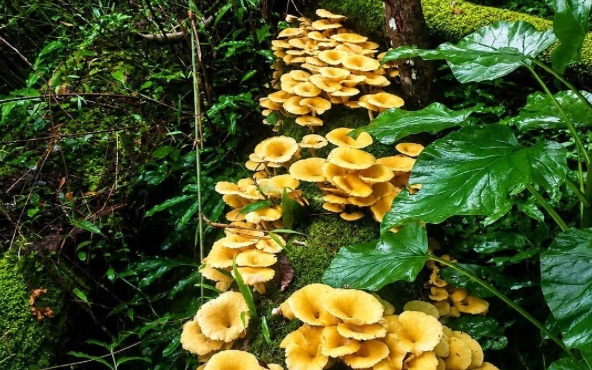
Locally known as Serso Mee, the Wild Golden Oyster Mushroom (Pleurotus citrinopileatus) grows on decaying hardwood logs in the rainy and humid seasons. Loved as an edible mushroom, it contributes to forest health by decomposing dead wood and recycling nutrients. Discover this beautiful part of Seinthuk’s forest ecosystem, where golden mushrooms flourish along moss-covered fallen trunks.
Wild Golden Oyster Mushroom of Seinthuk
Wild Golden Oyster Mushroom of Seinthuk
By Lobsang Tashi Thungon
Locally known as Serso Mee and scientifically identified as Pleurotus citrinopileatus, the Wild Golden Oyster Mushroom is a striking feature of the forests around Seinthuk. Its bright golden-yellow clusters grow on decaying hardwood logs, particularly during the rainy and humid seasons when moisture creates favourable conditions for fungal growth.
These mushrooms are edible and are enjoyed by many people. They are also valued for their nutritional content, including protein and dietary fibre.
Beyond their importance as a food source, golden oyster mushrooms play a vital ecological role. By decomposing dead wood, they help break down organic matter and recycle nutrients back into the forest ecosystem. This natural process supports soil health and contributes to the continuous renewal of forest life.
The forests of Seinthuk are beautiful not only for their trees and greenery, but also for these small yet remarkable organisms. Golden mushrooms growing along moss-covered fallen trunks create a natural spectacle, reflecting the intricate connections between fungi, decaying wood, moisture, and the surrounding forest environment.
Often overlooked, mushrooms are essential contributors to biodiversity and forest functioning. The Wild Golden Oyster Mushroom of Seinthuk is a reminder that even the smallest elements of a forest play an important role in sustaining the larger ecosystem.
Photo courtesy: Abu Passang Norbu and Khandu Lama Khandulama.
Related Stories from Nature