Sherdukpen Tribe’s Traditional Honey Hunting in Seinthuk
A living tradition of courage, teamwork, and ancestral wisdom, honey hunting continues among the Sherdukpen community of Seinthuk. Lobsang Tashi Thungon recounts joining his uncle and a group of 35 people to collect nearly 120 litres of wild honey from forested cliffs, sharing the cultural significance of this practice and the traditional clan responsibilities that helped sustain it across generations.
Sherdukpen Tribe’s Traditional Honey Hunting in Seinthuk
Sherdukpen Tribe’s Traditional Honey Hunting in Seinthuk
By Lobsang Tashi Thungon
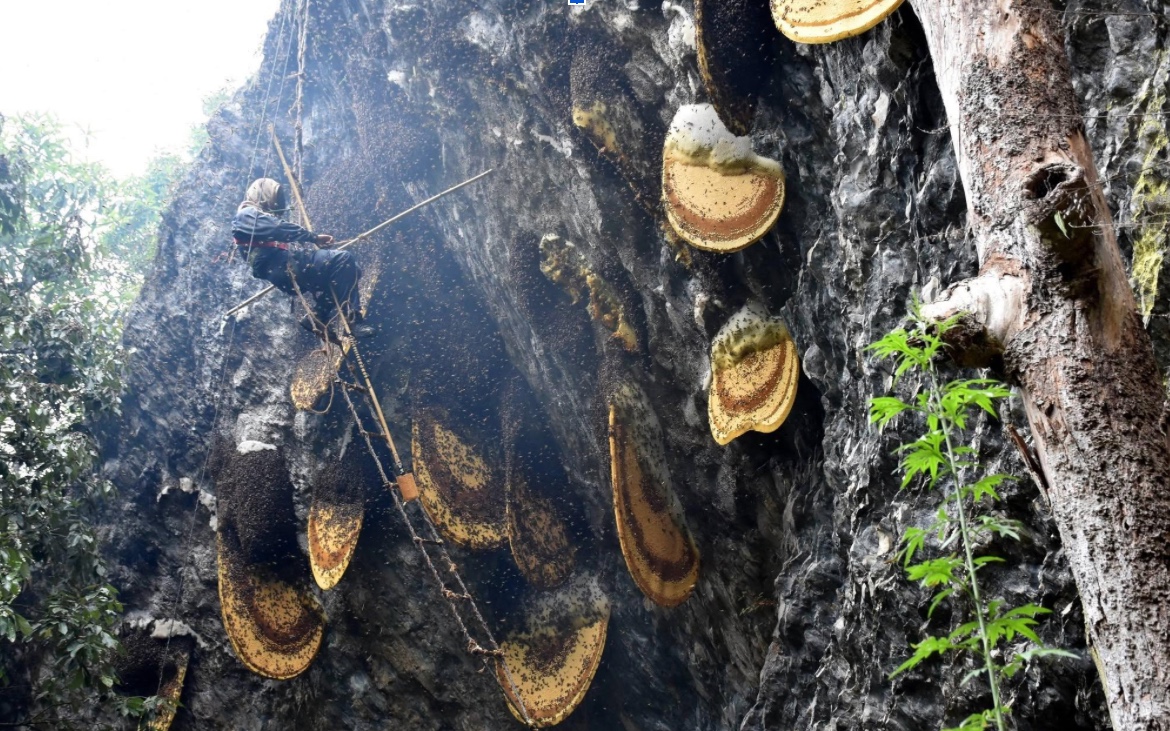
I was fortunate enough to witness honey hunting with my uncle once again this year. Thankfully, together with a group of 35 people, we were able to collect nearly 120 litres of pure wild honey from the surrounding forests and cliffs. And yes, this is no exaggerated tale; it is a living tradition that continues to survive among our people.
The Sherdukpen tribe has been known for its remarkable honey-hunting skills since time immemorial. The tradition of collecting honey from towering cliffs speaks not only of courage and physical endurance but also of the deep knowledge and expertise passed down from one generation to another. Facing the risks of steep mountain faces, our elders harvested honey through patience, teamwork, and a profound respect for nature.
Being part of this process takes me back to the stories narrated by our forefathers. In earlier times, the mountains and cliffs where wild bees nested were entrusted to particular clans. These clans were responsible for protecting and looking after the hanging beehives, ensuring that the community could continue harvesting honey sustainably for generations to come. It was not merely an act of collection, but a system rooted in responsibility, conservation, and traditional wisdom.
Honey hunting is therefore much more than a livelihood or an adventure. It is a reflection of our heritage, bravery, collective effort, and harmonious relationship with the forest. The practice carries the memories of our ancestors and the knowledge they developed through generations of living closely with nature.
Even today, this tradition reminds us of the rich cultural legacy preserved by our ancestors and the importance of protecting both our forests and indigenous knowledge systems. As we continue to practise and pass on these traditions, we also carry the responsibility of ensuring that they endure for future generations.
By Lobsang Tashi Thungon
Related Stories from Nature